
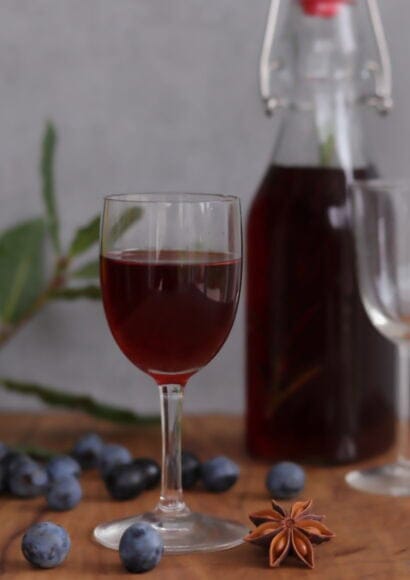
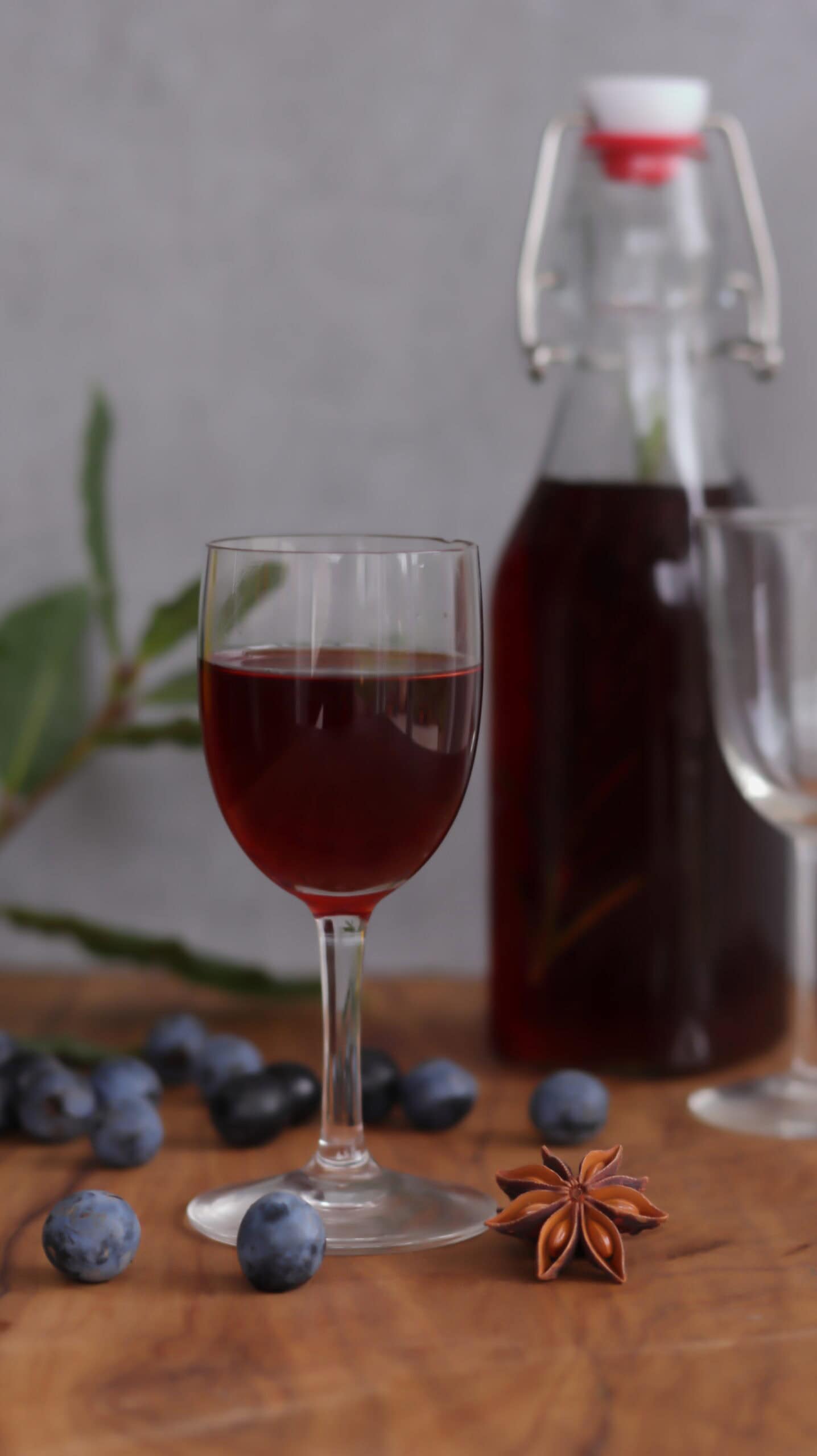
As the saying goes… “it’s always 6 o’clock somewhere”! Which in my parents’ house normally meant it was time for a gin and tonic. Summertime would be a zesty long drink. But in the wintertime, there is something special and festive about a sloe gin. Whether you like a traditional sloe gin, or with warming aromatics such as bay and star anise, as well as woody botanicals like rosemary. However you drink yours – neat or with tonic, an additional sprig of rosemary, dried orange slice – this recipe will go down a treat!
Sloes: a wild hedgerow treasure
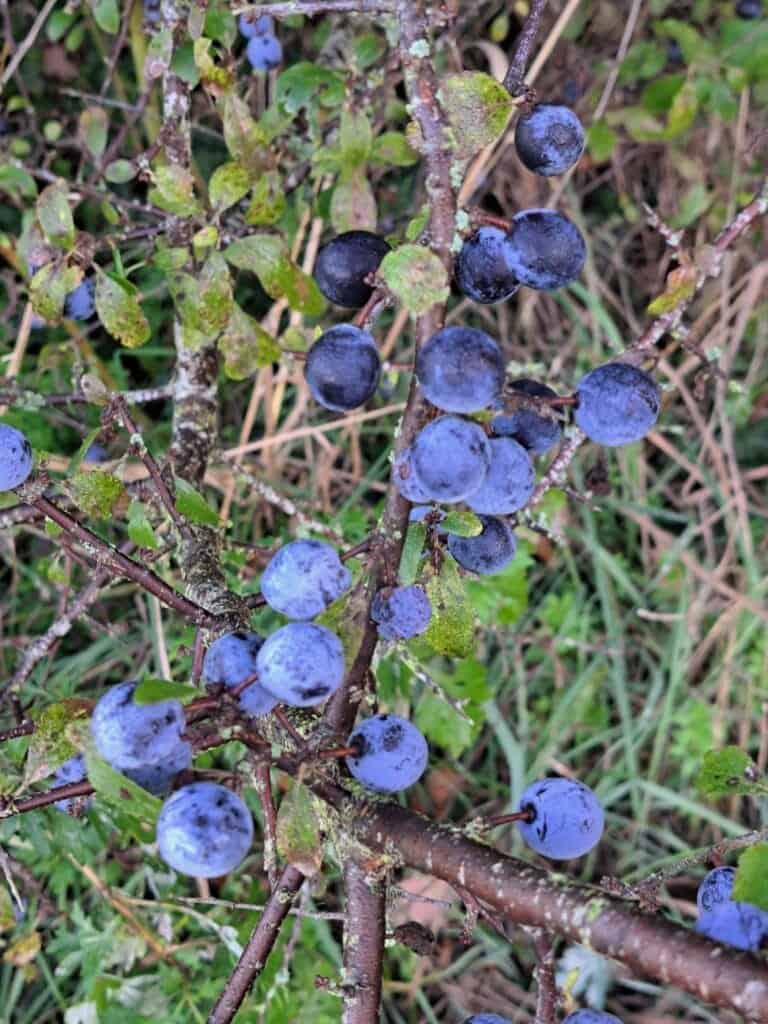
If you’ve ever walked past a British hedgerow in late autumn, you’re likely to notice small, dark blue/purple berries with a dusty coating clinging to thorny blackthorn branches. These are sloes. They are too astringent and tart to eat raw, but steep them in gin with sugar, and they transform into liquid gold.
Sloes are typically ready for foraging Oct-Nov. The old recipes insist you should wait until after the first frost, as it splits the skins slightly, helping release the sloes’ deep, colour and flavour into the gin. But in a modern-day kitchen, popping a bag full of sloes in the freezer for at least 24 hours will mimic a frost and do the job nicely!
Become your own ‘infusionist’ or ‘botanical alchemist’
The basis of the sloe gin recipe below can be adapted to your own tastes. It will start of course with the gin you use. I start with a ‘non-fancy’ gin so as not to deviate from the flavours I’m infusing. Also, a plain gin is normally cheaper.
But the sky is the limit on your flavour combinations. You can experiment with botanics and herbs such as rosemary, lavender, or thyme. Take it on a more citrus adventure with lemon, grapefruit, or a more warming orange. Or steer towards the spiced and warm with cinnamon, clove and allspice.
Make ahead for next year
It takes 2-3 months for the sloes and chosen botanicals to steep into the gin. It’s a little late for the festive season this year, but get ahead and make a batch now for the following year. Because do you know the best thing about sloe gin? It only gets better with age, if you can leave it that long!
Other foraging recipes to try
Below you can find a list of other recipes on the blog made with foraged fruits:
Of course, you can just use the sloes without adding anything else. By themselves, the flavour is still great. But if you want to experiment and add something different, then you can start with some tried and tested flavour combinations
– rosemary, lavender, or thyme
– lemon, grapefruit, or orange
– cinnamon, clove, or allspice
Sloe Gin
Equipment
- Large Kilner jar or similar sealable bottle
Ingredients
Basic Sloe Gin
- 70 cl bottle of gin
- 450 g sloes
- 200 g caster sugar
Bay and Star Anise
- 2 dried bay leaves
- 2 whole star anise
Rosemary
- 1 fresh sprig rosemary
Instructions
- Add the sloe gin ingredients into a sealable jar or bottle large enough for everything to fit.
- If making one of the variations above, add in the botanicals at this stage and then seal shut.
- Give everything a good shake every day for a week, until all the sugar has dissolved into the alcohol.
- If making the basic recipe, or the bay and star anise, leave the jar in a dark cupboard for 2-3 months. For the rosemary infused recipe, you don't want the rosemary to overpower the sloes. It's therefore best to remove the sprig of rosemary after a week. But check and adjust as you wish.
- When the time is up, use a sieve lined with muslin cloth, and strain the gin into a clean bottle. Seal and enjoy either neat, on ice, with tonic, or try making your own cocktails!
Notes
- You can save the sloes and reuse them to make another batch. However, the flavour in the sloes will be less intense. But try a smaller quantity of gin, with the right ratio of sugar, and explore another flavour combination!


I have tasted Chloe’s Sloe Gin a few times! And it is an absolute winner!
The perfect Winter warmer from the inside out!